The RMHCPA Annual Conference
Oct 16th - 18th
The Tenth Annual Rocky Mountain Humanistic Counseling and Psychological Association Conference will be held in Colorado Springs, Colorado. This year, the full conference will be at our building at 1767 S. 8th Street. We will be celebrating a decade of RMHCPA’s healing and community-building presence in Colorado! The Call for Papers and our Awards Nomination are now open.
The RMHCPA Executive Director's Report
by Louis Hoffman
This has been quite an amazing year for the Rocky Mountain Humanistic Counseling and Psychological Association. Already in 2026, we have purchased University Professors Press, hosted the Fourth World Congress of Existential Therapy, been selected as the new steward of the Rollo May Library, and begun planning for the 10th Annual RMHCPA Conference. We have continued to update the RMHCPA building, including starting to prepare a room to be the Rollo May Library and adding new signs for our building and clinic. More important than any of these accomplishments, I am inspired by the community that is being built at RMHCPA. It is sometimes hard to believe all that has been accomplished over the past 3 years since we purchased the building.
In reflecting upon these accomplishments, I find myself overwhelmed with appreciation for our amazing Board members, past and present. Over this year, we have had two of our founding Board members end their terms. Dr. Ian Wickramasekera, II, served as our Vice Chair of the Board since we began in 2016. An
-
RMHCPA Annual Conference
-
Board Updates
-
Introducing our New Board Chair, Dr. Matt ThelenUpdates
-
Introducing our New Board Chair, Dr. Matt Thelen
-
Reaching the Community
-
RMHCPA Buys University Professors Press
-
The Rollo May Library is Coming to RMHCPA
-
Becoming More Than a Statistic: A Humanistic Perspective on Breaking Generational Cycles
-
The Rollo May Library is Coming to RMHCPA
-
Remembering Dr. Jim Orakur
-
Remembering Dr. Brent Dean Robbins: An Embodiment of Existential Integrity
-
Noteworthy Reads
-
Congratulations
accomplished scholar and teacher, it was Ian who first made the suggestion of starting RMHCPA. After my family and I moved back to Colorado Springs, Nathaniel Granger, Jr., organized a surprise housewarming party. At this event, Ian, reflecting on Colorado becoming one of the major hubs of humanistic psychology, suggested that we need our own local organization. Shortly after this, we had our first organizing meeting. Throughout our history, Ian has been a force of optimism, motivation, vision, and encouragement. He has also helped many students connect with RMHCPA. Although Ian is stepping down from the Board, we are thrilled that he intends to stay active with the organization.
Dr. L. Xochitl Vallejos was a founding Board member and our Board chair from 2019 through 2026. This included the period in which we purchased the RMHCPA building. In addition to being Board Chair, she served as the Director of Clinical Training (DCT) over the past year and will continue in this role until our new DCT starts in September. It is hard to imagine where RMHCPA would be without Xochitl’s leadership. While she has become a well-respected scholar, teacher, and activist, she also brings a wealth of knowledge about organizations. Her vision and passion will remain a part of RMHCPA as she transitions to focusing on other life priorities.
Personally, I find a strong mixture of sadness and appreciation both personally and professionally with these transitions. Xochitl and Ian are both treasured friends who have supported me in profoundly meaningful ways. They are also two of my most respected colleagues. While I will miss having them at our monthly meetings, I am thankful that both continue to love and support RMHCPA. I know, too, that we will all continue to see them at some RMHCPA events. While they are leaving their roles, they are not leaving the organization or our hearts.
As they transition out, I am appreciative of new Board members who have joined us in 2026. Dr. Jason Dias, a longtime member and supporter, joined our Board early in 2026. Jason is a faculty member at Pikes Peak State College. For many years, he has been active in helping students connect with RMHCPA. And the love and respect Jason’s students have for him has always been evident, too. Jason’s deep heart for social justice and mentoring students brings valuable resources to our organization.
Sheer B joined the RMHCPA Board as our Undergraduate Board Member. As an organization that values the voices of students, our Student Board Members are full Board Members, not student representatives. Sheer has been active at Pikes Peak State College as well as many community organizations. Her deep commitment to social justice is an important addition to our board.
Last, Dr. Matt Thelen joined our Board and, shortly after, assumed the role of Board Chair. Matt is an experienced nonprofit leader, having previously served as Board Chair of Pikes Peak Suicide Prevention. He has been in private practice for many years in Colorado Springs and is an Editorial Board Member of The Humanistic Psychologist. Prior to joining the Board, he was the 2025 recipient of the Sandy Sela-Smith Humanistic Exemplar Award. Since the organization began, Matt has been a faithful member, and since we purchased the building, he has been a regular volunteer. With skills in woodworking and carpentry along with his skills as a therapist, he has contributed to many renovation projects in the building and is helping plan more. RMHCPA has been deeply blessed with amazing leaders. With Matt filling the succession as Board Chair, we are assured of a continued legacy of solid leadership.
Justin Walmsley, who has been a long-time Board member, recently began as our Board Vice Chair. As Conference Coordinator for the Fourth World Congress of Existential Therapy, Justin earned the respect and appreciation of many in the worldwide existential community for his diverse skill set and his ability to be kind even in times of great pressure. I am very excited to be working more closely with Justin as he begins the role of Vice Chair. In addition to his therapy skills, Justin brings experience with nonprofits, marketing, and leadership that will be immensely valuable to the organization.
In the past several months, three of our practicum students have moved on. Tyler Gamlen completed his practicum at our clinic, the Center for Humanistic and Interpersonal Psychotherapy (CHIP). Showing great dedication, Tyler commuted from Las Vegas to complete his CHIP practicum. In addition to seeing clients, he participated in several scholarly presentations representing RMHCPA. We are excited that Tyler is also looking for ways to stay involved with RMHCPA and CHIP.
Olivia Michael completed two years of practicum at CHIP. She has been involved with CHIP for over half of its existence. Throughout her time at CHIP, Olivia went above and beyond, including involvement with community outreach, developing our assessment program, helping design our office spaces, co-authoring publications, and presenting at conferences. She was also one of the recipients of the 2025 student humanistic exemplar award. While away on internship, she continues to serve on our CHIP Advisory Board and consult on the development of our assessment program.
Rebecca Wickersham completed her practicum with CHIP just a few weeks ago. We are excited, too, that she will return to CHIP in January for her internship. During her time at CHIP, Rebecca also went above and beyond, a consistent theme with our practicum students. She regularly volunteered at events (including multiple roles with the World Congress of Existential Therapy), co-presented at several conferences, and is collaborating on writing a book chapter.
There is much more than I would like to write about what is happening with RMHCPA and our community, but I will save this for other venues. This organization has captured my heart and my passions. This is not simply because of our mission, but because of the people involved with it. From our Board to our membership, I am continually amazed by the people connected with this organization. They provide important inspiration at a time in history where inspiration, compassion, and empathy are greatly needed.
Introducing our New Board Chair, Dr. Matt Thelen
by Matt Thelen
As the chair of the board of directors for RMHCPA, I’d like to introduce myself. I am a long-time member of RMHCPA and I was invited to serve on the board of directors. In this position I am surrounded by people who are passionate about Humanistic & Existential psychology and the impact on me is energizing. For this reason, I see my role as chair to foster community among people who can be helped by Humanistic & Existential psychology with people who want to use Humanistic & Existential psychology to help. This is a broad mission and it explains why
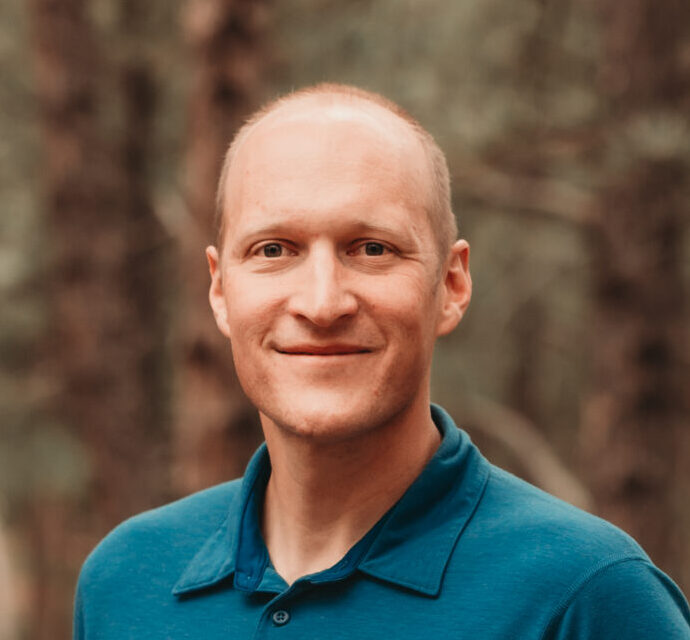
Dr. Matt Thelen
RMHCPA has a wide range of programs including the counseling clinic, CE classes, archives, certificate training, annual conference, and publishing press. There are many reasons to join RMHCPA and contribute to a community built on the values of Humanistic/Existential psychology.
As a psychologist working in independent practice, I know how important it is to belong to a community. As an American, I see the demoralizing headlines that impact me and my clients. At the same time, I am inspired to think about the rise of Existentialism to counter fascism during the world wars. Similarly, I am inspired to think about the rise of Humanistic Psychology as an adjunct to the women’s liberation movement and the racial equality movement in America. If you feel inspired by the same aspirations, I hope you will join RMHCPA because this community is stronger with you in it.
Reaching the Community
Serving vulnerable and marginalized populations has always been central to our mission. We continue this commitment in 2026 in new and meaningful ways. In addition to the services provided through CHIP, we are partnering with Be REAL Ministries to provide backpacks filled with personal items and essentials for people experiencing homelessness. Funding from Dr. Granger’s recent grant, along with other donations he has helped raise, will be dedicated to supporting communities most in need.
RMHCPA Buys University Professors Press
On May 29, 2026, the Rocky Mountain Humanistic Counseling and Psychological Association officially purchased University Professors Press (UPP). UPP was established in 2012. After Dr. Louis Hoffman left his position at the University of the Rockies, where he served as the Editor-in-Chief of the University of the Rockies Press,

several individuals approached him about starting a private publishing company. These colleagues were published authors who identified as humanistic, existential, or transpersonal psychologists. At this time, a couple of the publishing companies that were publishing books on humanistic and existential psychology were changing their focus. Hoffman worked to bring these colleagues together to form UPP.
In 2012, UPP published its first book, The Polarized Mind, by Kirk Schneider, the leading existential psychologist in the United States. Since this time, UPP has expanded its catalog to 66 books. This includes books by many leading authors in existential, humanistic, and transpersonal psychology, such as Stanley Krippner, Amedeo Giorgi, Siebrecht Vanhooren, Joel Vos, Pninit Russo-Netzer, Stefan Schulenberg, Brent Dean Robbins, Louis Hoffman, Mark Yang, Francis Kaklauskas, Tom Greening, Richard Bargdill, Eugene DeRobertis, Veronica Lac, Terri Goslin-Jones, L. Xochitl Vallejos, Rich Furman, Mike Arons, Andrew Bland, and many more.
UPP is one of the few publishing companies specializing in humanistic, existential, and transpersonal psychology. Additionally, UPP began a Poetry, Healing, and Growth book series that includes over 10 poetry volumes. Each of these books has been influenced by humanistic psychology perspectives. The purchase of UPP by RMHCPA brings together two of the most influential emerging institutions in humanistic and existential psychology. For RMHCPA members, it will provide access to discounts on UPP books. RMHCPA members will also have opportunities to learn about the publishing process. As UPP becomes part of a nonprofit organization, it opens up new opportunities for funding new and unique books.
UPP will remain an academic process, including using a selective peer review process to select manuscripts. While RMHCPA members will be able to submit manuscripts to be considered for publication, to maintain the academic integrity of the publishing company, all manuscripts will undergo the same peer review process. UPP's bookstore and warehouse will be housed in the RMHCPA building. We will be introducing special member prices at RMHCPA events. Beginning in 2027, a portion of the proceeds of UPP books will go to support our training clinic, the Center for Humanistic and Interpersonal Psychotherapy.
During the rest of 2026, we will be working to integrate UPP into RMHCPA. While maintaining all of the prior editorial board, UPP will seek to expand its editorial board and establish opportunities for CHIP practicum students, interns, and postdocs as well as other students to become involved with UPP to be mentored into publishing. We will continue to share updates on this process.
We are excited about this acquisition and what it may mean for RMHCPA members and the future of humanistic, existential, and transpersonal psychology scholarship.
The Rollo May Library is Coming to RMHCPA
The Rocky Mountain Humanistic Counseling and Psychological Association has been selected to be the steward of the Rollo May Library.
Dr. May’s library includes many rare books and journals that influenced his development and scholarly contributions. It is arguably the most prized book collection for existential scholars in the United States, if not the world.
RMHCPA is organizing a group of individuals to transport the books from their current location in Pasadena, California to their new home in Colorado Springs in the RMHCPA archives in early September 2026.
This collection will join our current collections from Tom Greening, Ilene Serlin, Steven Pritzker, Stanley Krippner, Shelley Diamond, and Richard Bargdill.
Rollo May was a pioneering existential psychologist. His book Existence, published in 1958, translated several writings of Ludwig Binswanger, the founder of existential therapy. It also includes several important writings of his own that helped establish existential-humanistic psychology—a uniquely American approach to existential therapy.
After 1958, May wrote or edited 13 books, including Love and Will, The Courage to Create, Freedom and Destiny, and The Cry for Myth. These volumes, which developed and advanced existential therapy in the United States, also became popular books with the general public. Through these books, along with his journal articles, public and academic lectures, teaching, and mentoring of students, May established himself as one of the most influential psychologists of all time.
Bringing the Rollo May Library to the RMHCPA archives is both significant and appropriate. Through hosting the Fourth World Congress of Existential Therapy, purchasing University Professors Press (a leading publisher of existential scholarship), establishing the Center for Humanistic and Interpersonal Psychotherapy (CHIP; a training clinic specializing in existential-humanistic therapy), and numerous important publications from its membership, RMHCPA has established itself as one of the most influential humanistic and existential psychology organizations in the world. Through continuing to expand its archives, RMHCPA further solidifies this position of influence and stewardship.
We hope that you will consider supporting the Rollo May library. We have created a fundraiser to help cover the costs of transporting the books to Colorado and building bookshelves to house them. If you would like to support the Rollo May library, please consider giving a one-time or monthly contribution by scanning the QR code below or visiting https://www.pledge.to/the-rollo-may-library-fund
Dr. May’s library includes many rare books and journals that influenced his development and scholarly contributions. It is arguably the most prized book collection for existential scholars in the United States, if not the world.
RMHCPA is organizing a group of individuals to transport the books from their current location in Pasadena, California to their new home in Colorado Springs in the RMHCPA archives in early September 2026.
Becoming More Than a Statistic: A Humanistic Perspective on Breaking Generational Cycles
By Aja'Dae L. Trent, MA
This past June, the global counseling community gathered for the 4th World Congress on Person-Centered & Experiential Psychotherapy and Counseling, bringing together practitioners, researchers, educators, and advocates committed to advancing human dignity, authentic relationships, and healing-centered practice. While the conversations spanned countries and cultures, one theme emerged repeatedly: meaningful change begins by recognizing the humanity of every individual. That message resonates deeply within our own communities.
Every day, mental health professionals encounter people who have been described by statistics long before anyone has taken the time to understand their stories. We speak of adverse childhood experiences, educational disparities, community violence, housing insecurity, substance use, and suicide rates. These statistics are essential for identifying need and informing policy, but they can also unintentionally reduce people to numbers rather than honoring them as whole human beings.
Humanistic psychology has long challenged us to see beyond labels. Carl Rogers reminded us that people possess an inherent capacity for growth when provided with empathy, genuineness, and unconditional positive regard. Abraham Maslow encouraged us to look beyond deficits and toward human potential. These perspectives remain remarkably relevant as counselors navigate increasingly complex social, cultural, and psychological realities.
For many individuals, healing involves more than addressing a single diagnosis or presenting concern. It requires understanding the generational narratives that shape identity, relationships, decision-making, and expectations about the future. Trauma is often transmitted not only through significant events but also through learned beliefs about safety, trust, belonging, and self-worth.
"Healing does not erase the past, but it can transform its influence on the future."
Likewise, resilience can be cultivated across generations through supportive relationships, community connection, and opportunities for meaning-making. nHumanistic psychology has long challenged us to see beyond labels. Carl Rogers reminded us that people possess an inherent capacity for growth when provided with empathy, genuineness, and unconditional positive regard. Abraham Maslow encouraged us to look beyond deficits and toward human potential.
Breaking generational cycles is not about assigning blame to previous generations. Rather, it is an invitation to examine inherited patterns with compassion and curiosity. It asks difficult questions:
• Which beliefs continue to serve us?
• Which behaviors were necessary for survival but no longer support flourishing?
• How can healing become a legacy rather than an individual achievement?
These questions align naturally with the values of person-centered practice. When counselors create environments where clients feel genuinely seen, heard, and valued, they foster conditions in which people can begin to rewrite internal narratives that have often persisted for decades. As our profession continues to evolve, community healing deserves equal attention alongside individual treatment. Healing occurs not only within the counseling office but also in classrooms, workplaces, neighborhoods, faith communities, and families. The therapeutic relationship can become a catalyst for broader transformation when individuals carry new ways of relating back into their daily lives.
This perspective is particularly relevant for communities historically affected by systemic inequities. Humanistic counseling encourages us to move beyond asking, “What is wrong with this person?” toward asking, “What has this person experienced, and what strengths have enabled them to persist?” This shift does not ignore suffering; instead, it acknowledges both pain and possibility.
The discussions highlighted during this year's World Congress remind us that empathy is more than a clinical skill—it is a way of engaging with humanity itself. In a time marked by uncertainty, polarization, and increasing mental health needs, our profession has an opportunity to model relationships grounded in dignity, authenticity, and hope.
Perhaps one of the greatest contributions counselors can make is helping people recognize that they are more than the circumstances they inherited. Healing does not erase the past, but it can transform its influence on the future.
Every conversation rooted in empathy, every relationship built on trust, and every opportunity to foster self-understanding becomes part of a larger legacy—one that moves individuals, families, and communities beyond surviving toward flourishing.
As we reflect on the insights shared across the global counseling community this summer, we are reminded that the work of humanistic psychology extends far beyond theory. It lives in our daily practice, our relationships, and our unwavering belief that every person possesses the capacity for growth when met with compassion.
In the end, perhaps our greatest responsibility is not simply helping people cope with the lives they have inherited, but empowering them to imagine—and create—the lives they wish to leave behind.
Remembering Dr. Jim Oraker
by Louis Hoffman
I recently learned of Dr. Jim Oraker’s death on September 2, 2025. When I moved to Colorado Springs, Jim was one of the first people I met, and we quickly connected. We had graduated from the same doctoral program, shared many professional interests, and both worked at the Colorado School of Professional Psychology, which later became the University of the Rockies.
One of Jim’s many lasting legacies was his work with colleague assistance programs. He helped establish Colorado’s colleague assistance program for psychologists and later served as the chairperson of the American Psychological
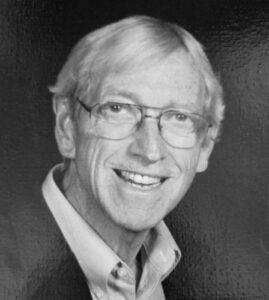
Dr. Jim Oraker
Association’s Colleague Assistance Advisory Committee. Jim sought to apply the principles of colleague assistance to create more compassionate and supportive ways of working with graduate students who were struggling in their master’s or doctoral programs, too.
This work revealed Jim’s heart and the depth of his beliefs. He recognized that everyone suffers at times and that all of us occasionally need help. When someone was in need, Jim never looked down on them; instead, he approached each situation with compassion, offering support rather than judgment. He brought this same perspective to his work with religious professionals, a topic he and I presented on together at the 117th Annual Convention of the American Psychological Association in 2009.
At the Colorado School of Professional Psychology, which later the University of the Rockies, Jim and I collaborated to. help develop their faculty governance systems. Somehow, the two of us regularly ended up on the faculty senate and similar committees. This is where I saw a different side of Jim. While most knew him as positive, optimistic, and encouraging, not everyone witnessed his willingness to roll up his sleeves and advocate strongly for issues he cared about. I learned a great deal working with him to support faculty, students, and quality education while also witnessing the depth of his character revealed.
Some of my favorite memories with Jim come from the years we traveled to China together. For several years, he joined me in taking groups of students abroad. Jim loved these trips. In China, he let go of some of his seriousness and became quite playful. On these trips, we shared many laughs alongside the work we were doing. One year, while organizing the International Conference on Existential Psychology, we stayed in a location with many Chinese soldiers—soldiers who were disciplined, stoic, and rarely showed emotion. Each morning, Jim went for a run before the conference. One day, he decided to try to make one of the soldiers smile. I do not remember exactly what he did, but somehow he got the very serious soldier to crack a smile—and even laugh. Jim was extremely proud of this small but meaningful victory.
Although we enjoyed our time together in China, we also engaged in important and impactful work. Jim left a lasting impression on many people there, which later led him to participate in additional projects in China over the years.
During the last several years of Jim’s life, he struggled with dementia. I remember noticing the first signs during our final trip to China. It was heartbreaking to realize that he would no longer be able to join us on these journeys that meant so much to him. A few of us from the Colorado School of Professional Psychology continued to meet for lunch a few times a year, and while those gatherings were wonderful, they were also difficult. Each time, I saw Jim slip further into dementia. The last time we spoke on the phone, I knew it would not be long before he no longer recognized me.
As I try to conclude this remembrance, I find it easy to write about Jim yet difficult to stop. I am not ready to say goodbye to my friend, and I struggle to find an ending worthy of him. His legacy of compassion, encouragement, and integrity will continue to live on in the many lives he touched.
Remembering Dr. Brent Dean Robbins: An Embodiment of Existential Integrity
by Louis Hoffman
Brent Dean Robbins, one of the most influential contemporary figures in existential psychology, died of pancreatic cancer on April 28, 2026. Brent is a widely accomplished and recognized scholar and professor. While his contributions to humanistic and existential psychology are extensive, the greatest loss is in the person of Brent Robbins. I had the honor of knowing Brent for over 20 years, working closely with him on
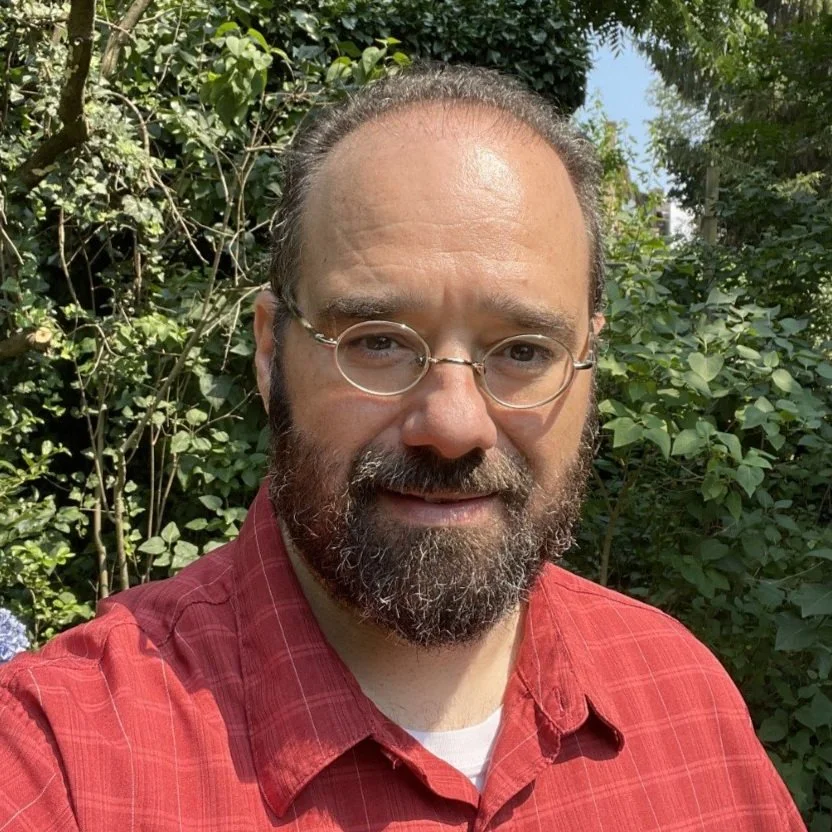
Dr. Brent Robbins
many projects. We collaborated on organizing conferences, giving presentations, and editing books. Through these experiences, I came to know Brent's heart and integrity. He was committed to social justice, supporting students, and living consistently with values informed by existential psychology. When facing challenging circumstances, he did not think about what was best for him, but about what was right in accordance with his values.
When Brent and I met on Zoom for him to share the news that he was diagnosed with stage 4 pancreatic cancer, we shared tears and memories but also hope. This was not a naïve hope nor a hope rooted in him beating cancer. Rather, it was an honest hope that recognized that most likely he would not live more than a few years. It was a hope about what meaning could be imbued in the time he had left. Brent shared that he was living the life he wanted to live, so he would not change much except for cutting back on a few things. He wanted to keep teaching, leading his program, presenting, and mentoring students. And he did.
The last year and a half of Brent’s life, he demonstrated existential integrity in a way I have never before witnessed. He gave presentations and interviews on facing death that reflected and embodied the values and lessons of existential psychology that he had been teaching and living for decades. He continued to love his friends and family and continued to serve his students and the field. Even just nights before his death, he had a mentoring conversation with a student, offering them encouragement. Brent remained Brent—even into the last moments of his life.
The night Brent died, I was doing the final copy edits on an article that I wrote about Brent for a special edition of the Journal of Humanistic Psychology (Hoffman, 2026). From the timing, I may have been working on these the moment Brent died. Soon after, I received the news that Brent had passed. The next day, I sat in my office and had a tea ceremony with three different types of tea in Brent’s honor, pouring him a cup with each round. It was a simple ritual to say goodbye to my friend. I reflected on many memories, including traveling to China and other places together. I remembered lessons I learned from Brent, and I remembered the beautiful, full laughter that came so easily to him. My appreciation and tears steeped together as did the tea and water.
The word that kept coming to my mind as I reflected on Brent in the days and weeks after his death was generativity. He lived this—deeply. It was part of his way of being before his diagnosis, but it was illuminated so much in those final months. He continued to give of himself in a loving way. This giving sought nothing for himself—it was a gift to those around him and to the world. The way Brent faced death reminded me why I am an existentialist. I only hope, when the days of my life become more limited, that I can face them with such integrity and generosity as my dear friend did. His final days were the greatest lesson he ever taught, and the greatest gift that he gave to those of us who continue to grieve for him.
Noteworthy Reads
Are you looking to expand your library or further your knowledge of Humanistic and Existential counseling and psychology? We have compiled a list of fantastic reads, most of which are authored, edited, or contributed to by RMHCPA board members and members. You can visit the UPP website to purchase at universityprofessorspress.com.
• APA Handbook of Humanistic and Existential Psychology: Vol. 1. History, Research, Philosophy, & Theory — L. Hoffman, L. X. Vallejos, D. Hocoy, U. Tummala-Narra & E. DeRobertis, Editors
• APA Handbook of Humanistic and Existential Psychology: Vol. 2. Clinical and Social Applications — L. Hoffman, L. X. Vallejos, D. Hocoy, U. Tummala-Narra & E. DeRobertis, Editors
•Artificial Intelligence and Being Human: Critical Thinking, Creativity, and Empathy — L. Hoffman & L. C. E. Hoffman
• Authenticity, Self-Awareness, and Facing Life Directly in Existential-Humanistic Psychotherapy — D. Spaeth, J. Vanderhoff, A. Pintauro & L. Hoffman
• Clinical Supervision Conducted from an Existential-Humanistic Perspective — M. C. Yang &
X. Zhang
• Engaging Frantz Fanon to Advance Existential-Humanistic Psychotherapy — L. Hoffman
• Existential-Humanistic Psychotherapy: An Integrative, Multicultural Perspective — K. J. Schneider, T. R. Jackson & L. Hoffman
• Existential Shattering — L. Hoffman & J. Singer
• Humanistic Psychology: A Vision for the Future — L. Hoffman
• Humanistic Responses to Objectification: The Contributions of Brent Dean Robbins — L. Hoffman
• Introduction to the APA Handbook of Humanistic and Existential Psychology — L. Hoffman
•Lessons from Letters for My Father — O. Michael & E. Enegren
• Relationality, Isolation, and Alienation — L. Hoffman & S. Islam
• The Rocky Mountain Humanistic Counseling and Psychological Association: An Emergent Leader for Humanity — L. Hoffman, L. Edwards, E. Enegren, N. Granger, L. X. Vallejos, H. L. Vargas, B. Varisco & I. Wickramasekera
• The Vibrant Center: A New Consciousness for Our Broken Age — K. J. Schneider
• Working with Emotions in Existential-Humanistic Psychotherapy — B. Varisco & L. Hoffman
Congratulations on all of your hard work and dedication to Humanistic and Existential Scholarship, Community, and Advocacy
- Olivia Michael and Edbury Enegren are the recipients of the Student Humanistic Exemplar Award from the Rocky Mountain Humanistic Counseling and Psychological Association (October 2026)
- Edbury Enegren has accepted an aapoint as the graduate student board member of the Rocky Mountain Humanistic Counseling and Psychological Association
- Olivia Michael completed a two-year practicum at the Center for Humanistic and Interpersonal Psychotherapy (CHIP) in May, 2026, and began her internship at Florida International University in Miami in August of 2026. She continues to consult with the CHIP and is a member of CHIP’s Advisory Board.
- Brittany Varisco graduated from the University of Denver and will be beginning a postdoctoral residency at the Center for Humanistic and Interpersonal Psychotherapy (CHIP). She has also be serving as the Director of Clinical Training at CHIP.
- Jeff Singer graduated from the University of Denver and will be doing a parttime postdoctoral residency at Center for Humanistic and Interpersonal Psychotherapy (CHIP) along with a postdoctoral residency in private practice.
- Justin Walmsley accepted a position as Administrative Director of Center for Humanistic and Interpersonal Psychotherapy (CHIP).
- Jack Thomas will be starting as a Psychotherapist at the Center for Humanistic and Interpersonal Psychotherapy (CHIP).
- Louis Hoffman has been appointed as Fellow of the Society for Theoretical and Philosophical Psychology (APA Division 24) and the Society for the Psychological Study of Culture, Ethnicity, and Race (APA Division 45). He is now Fellow of nine APA divisions.